Retro Christmas Svg Review
When I sit down to review a digital asset for embroidery, my first instinct is always practical: will this stitch well? It doesn’t matter how trendy the aesthetic is if the file collapses into a muddy mess of thread tension errors or if it looks cheap on a finished product. That is exactly where my evaluation of the Retro Christmas Svg - begins. As an experienced designer who frequently bridges the gap between digital files and tangible handmade goods, I look at these assets not just as images, but as blueprints for physical objects.
This particular design arrives as a digital download, packaged in a convenient ZIP folder. While the listing highlights its compatibility with cutting machines like Cricut and Silhouette, my focus here is strictly on its viability as a machine embroidery design. For those of us in the craft business, knowing how a vector translates to thread is the difference between a profitable item and a customer return.
First Impressions and Visual Mood
The moment you open the file, the "retro" vibe hits immediately. This isn’t your standard, overly polished clip-art Christmas scene. There is a distinct vintage personality to the shapes—a nostalgic warmth that feels curated rather than generated. In the world of holiday graphics, retro styles have seen a massive resurgence, particularly among buyers looking for something that feels cozy, timeless, and slightly quirky.
From a layout perspective, the design strikes a balance between bold and breathable. The negative space is handled well, which is critical for embroidery. If a design is too cluttered, it can overwhelm the fabric texture. However, if it is too sparse, it might look unfinished on larger items. This embroidery project asset seems to land squarely in the "statement piece" category. It has enough visual weight to stand alone on a chest pocket or a tote bag without needing excessive surrounding text or filler elements.
Real-World Application: The Tote Bag Test
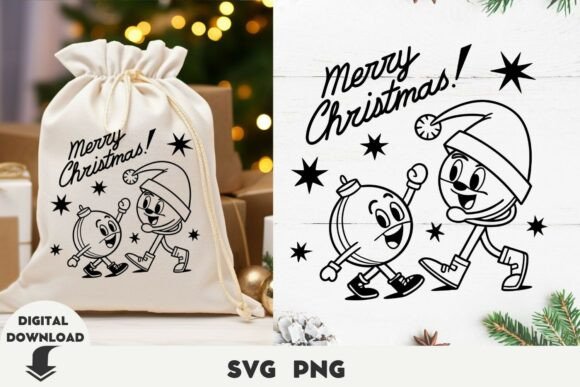
To truly understand how this design performs, I imagine placing it on a real-world product. Let’s take a sturdy canvas tote bag design as our primary test subject. This is a staple item for any Etsy seller or craft fair vendor during the holiday season. When I visualize stitching this Retro Christmas Svg - onto natural-colored canvas, the contrast potential is high.
If you choose thread colors that complement the retro palette—perhaps mustard yellows, deep teals, or burnt oranges against a cream background—the design pops. It transforms a simple accessory into a personalized gift that feels intentional. Customers aren't just buying a bag; they are buying a piece of seasonal decor they can carry around. The clean lines of the SVG translate well to satin stitches, giving the edges a crisp, professional finish that elevates the perceived value of the handmade product.
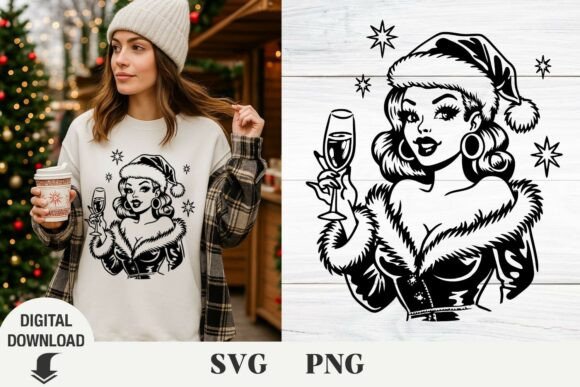
I also see this working beautifully on a heavy cotton sweatshirt embroidery piece. The retro theme pairs naturally with the comfort aesthetic of sweatshirts. Imagine a small, left-chest placement of this design. It’s subtle enough for everyday wear but festive enough for holiday parties. The key here is scale. Because the design has strong graphic qualities, it holds up even when scaled down, provided the hoop size allows for proper stabilization.
Technical Performance and Stitch Clarity
When converting a vector to an embroidery file, detail loss is the biggest risk. With this specific design, the shape language appears robust. It likely relies heavily on fill stitch areas and perhaps some decorative accents rather than tiny, intricate details that require extreme precision. This is a smart approach for commercial viability. High-density designs can cause puckering, especially on thinner fabrics, while low-density designs might show the fabric weave through the thread.
For those using this as an applique design, the outlines seem clean enough to support precise cutting and stitching. The transition between different elements should be smooth, reducing the need for excessive jump stitches that could snag or create bulk. However, because this is a digital file, I strongly advise checking the stitch density before running it on your final garment. A quick test on scrap fabric will reveal if the underlay stitches are sufficient to hold the pile down without distorting the fabric.
Consider the use of running stitch for any fine details. If the original SVG includes thin lines, ensure your digitizing software converts them appropriately. On a dark fabric background, thin running stitches can disappear. Switching to a thicker satin stitch or adding a contrasting outline can solve this, ensuring the design remains legible and visually appealing after washing.
Where to Use Carefully
No design is perfect for every surface. While the Retro Christmas Svg - is versatile, there are limitations. Avoid using this on highly textured fabrics like bouclé wool or thick chenille, as the machine may struggle to penetrate evenly, leading to skipped stitches. Similarly, stretchy knits require careful stabilization; without a proper cut-away stabilizer, the retro curves might distort as the fabric stretches during wear.
Small hoop sizes present another challenge. If you attempt to digitize this for a tiny embroidered patch or a miniature baby item, you must inspect the small details closely. Tiny lettering or complex inner shapes might merge together if the resolution is too low. Always test the design in black and white mockups to check for clarity before committing to expensive threads.
Curved surfaces, such as caps or hats, also demand attention. The design’s flat geometry needs to be adapted to follow the curve of the cap front. If the digitizing isn’t adjusted for curvature, the retro shapes might look stretched or warped. For these applications, consider simplifying the design or using a smaller placement area.
Impact on Brand and Customer Trust
In the competitive landscape of commercial embroidery, presentation matters. A well-executed design signals professionalism. When a customer receives a finished product with clean stitches, consistent tension, and no loose ends, their trust in your brand increases. They are more likely to leave positive reviews and recommend your shop to others.
The retro aesthetic also taps into current trends, making your items feel relevant and desirable. It appeals to a broad demographic, from young parents looking for unique baby embroidery gifts to older customers seeking nostalgic holiday decor. By offering high-quality implementations of popular styles, you position your small shop product line as both trendy and reliable.
Practical Designer Notes
- Test First: Always run a sample on the actual fabric you plan to sell. Fabric behavior varies wildly.
- Check Contrast: Ensure your thread colors provide enough contrast against the fabric. Low contrast can make the design look dull.
- Stabilizer Choice: Use the correct stabilizer for the fabric weight. Heavy fabrics need heavy-duty support.
- Licensing: Confirm the licensing terms before selling finished items. Some digital files allow commercial use, while others do not.
- Mockups: Create printable mockups to showcase the design on various products before investing in production.
Ultimately, the Retro Christmas Svg - offers a solid foundation for holiday projects. Its strong visual identity and adaptable layout make it a valuable addition to any designer’s design assets library. With careful execution and attention to technical details, it can help you create memorable, high-quality embroidery project outcomes that resonate with customers.